THIS WEBSITE IS POWERED BY GLOBAL INNOVATION EXCHANGE, A TECH PLATFORM FOR GLOBAL DEVELOPMENT INNOVATIONS.
Updated Jul 29, 2019
Lauren Brisbo
Send MessageStage 5: Scaling
Randomized evaluations are the gold standard in evaluation design. A recently completed 3-year independent randomized control trial that was lead by best-in-class researchers from MIT, Yale, and Stockholm University showed that Living Goods is reducing under-5 mortality by over 27 percent. The study also showed that drug prices fell 17 percent at clinics and drug shops near where Living Goods operates, and that the prevalence of fake drugs fell by 50 percent, suggesting positive competitive pressure.
1
Key Partner
4
Countries Implemented In
Verified Funding
?
Problem
Millions of children in developing countries continue to needlessly die from diseases that are treatable for less than the cost of a cup of coffee. Malaria, diarrhea, and pneumonia cause the majority of these early deaths. Newborn infections and poor nutrition add to the burden. The world lacks scalable, cost-effective delivery systems of dependable medicines. In the poorest countries health choices are bleak. Public health systems are chronically under-funded, under-stocked, and under-managed. Stock out rates at public health facilities can exceed 50 percent and absenteeism is common. In Africa, there are only 2.3 healthcare workers per a population of 1,000—in the Americas there are 24. Public health experts estimate that it would require at least four million more health workers to meet the need. Many poor consumers seek care and products from private outlets, which are no better than public health systems. The private sector is a fragmented and inefficient landscape of millions of small outlets served by multiple layers of resellers. The result? The poorest consumers pay retail prices for vital drugs that reach 350 percent of factory cost, counterfeit products abound, and poorly trained, poorly monitored health outlets are the norm. Each of these problems increases at the “last mile” where the need is the greatest.
}
Solution
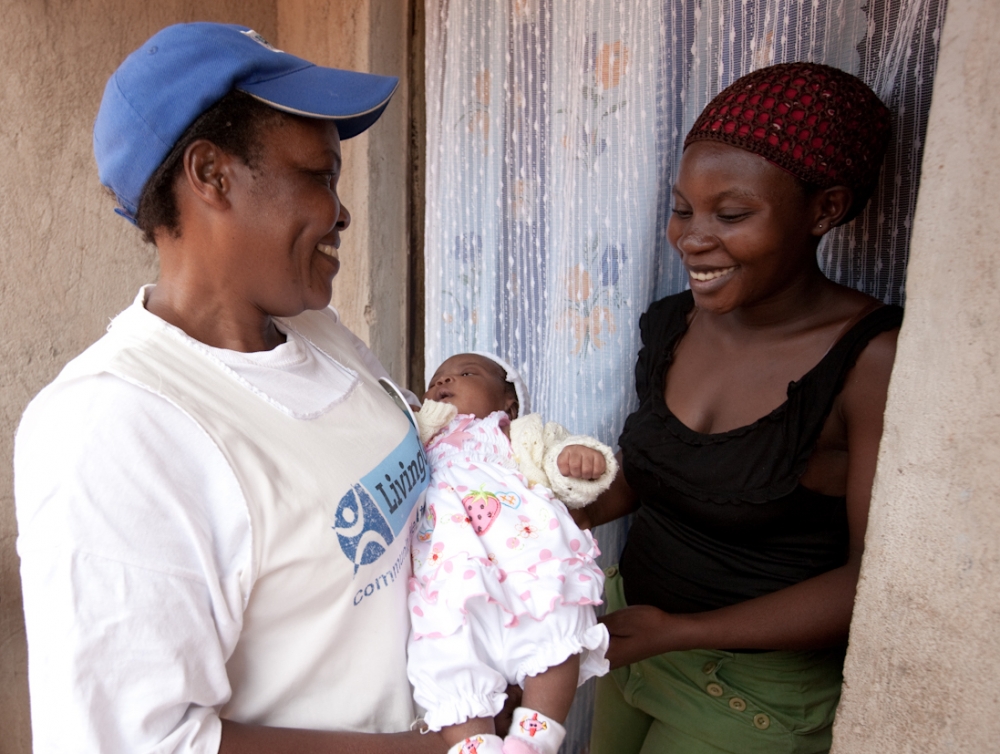
At Living Goods we empower people to improve the health of their families, friends and communities. Living Goods supports networks of ‘Avon-like’ health entrepreneurs who go door to door to teach families how to improve their health and wealth and sell life-changing products such as simple treatments for malaria and diarrhea, safe delivery kits, fortified foods, clean cook stoves, water filters, and solar lights. By combining the best practices from business and public health, we are dramatically lowering child mortality AND creating livelihoods for thousands of enterprising women.
Innovation Description
Living Goods’ game-changing model empowers health entrepreneurs to deliver life-saving products to the doorsteps of the poor in three health impact areas.
1. Defeating childhood diseases: Living Goods Community Health Promoters educate families on how to prevent the leading killers: malaria, diarrheal disease, and pneumonia. We sell bed nets to guard against malaria and water filters to stop waterborne infections. When a child falls ill our agents provide prompt diagnosis and treatment using our smart Android app. They use a rapid diagnostic test for malaria. Six simple questions guide agents to an accurate diagnosis every time. The app sends automatic daily text reminders to ensure patients complete the full course of treatment. The system flags acute cases for immediate referral to a qualified facility. Agents follow up with referrals within 48 hours to ensure the patients received proper care and are fully recovered. We focus on kids under five and especially newborns, who are at the greatest risk.
2. Family planning, healthy pregnancies and saving newborn lives: To help women plan and space pregnancies, our agents provide family planning education and sell contraceptives such as condoms and birth control pills. We also testing other methods of family planning, for example injectable contraceptives. Through regular home visits agents identify pregnancies early, educate moms on maternal health and nutrition, and register each mother on our mobile system to receive automated text messages every week with advice timed to their delivery date. Health Promoters use the Living Goods Pregnancy App to flag risk factors and danger signs, and immediately refer high-risk pregnancies to a proper facility. Agents visit new moms as soon as possible after delivery to assure that the baby is immediately and exclusively breastfed, kept warm, and kept free from infection. To help ensure newborn visits happen promptly, we provide a free cozy cap to every new mom who notifies her CHP when she is in labor. We also provide small financial incentives for each registration and for postnatal visits.
3. Nutrition: Stunting, a serious consequence of malnutrition, affects over 40 percent of children in Africa and India. The lack of simple micronutrients like vitamin A contributes to over half of under-five deaths. For these reasons, Living Goods places a major emphasis on improving child nutrition. Our agents promote exclusive breastfeeding for the first six months of life—the best nutrition a mother can offer her newborn child. We provide at-home education on a healthy diet and focus on improving micro-nutrient intake during pregnancy and in the vital period from six to twenty-four months. To improve nutrient consumption, Living Goods develops, sources, and sells our own branded fortified foods. We created Healthy Start, a vitamin-fortified complimentary feeding porridge that is now our most popular product. We test and distribute a wide range of other nutritional products such as vitamin A, iron folate, fortified oil, and fortified millet flour. We are constantly testing new products. Contact us to share ideas for new nutrition products or services.
Milestones
Jan 2018
Recognition ReceivedVERIFIED
2018 Innovator Cohort
TITLE2018 Innovator Cohort
Mar 2017
Funds RaisedVERIFIED
$1,437,020
Sep 2016
Funds RaisedVERIFIED
$5,000,000
Date Unknown
New Country Implemented In
Kenya
Date Unknown
New Country Implemented In
Zambia
Date Unknown
New Country Implemented In
Myanmar